
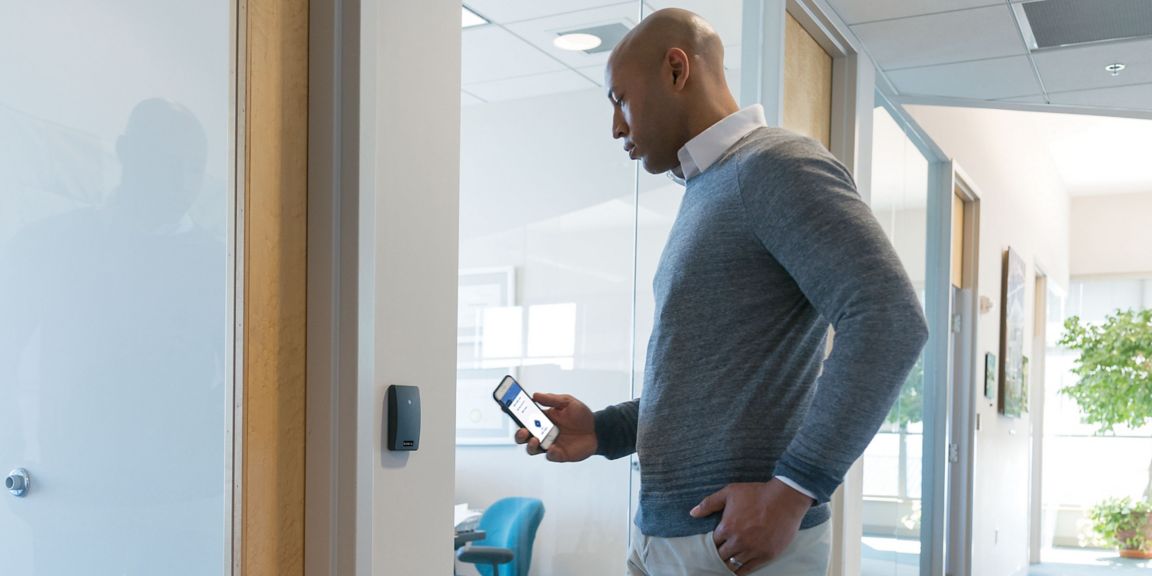
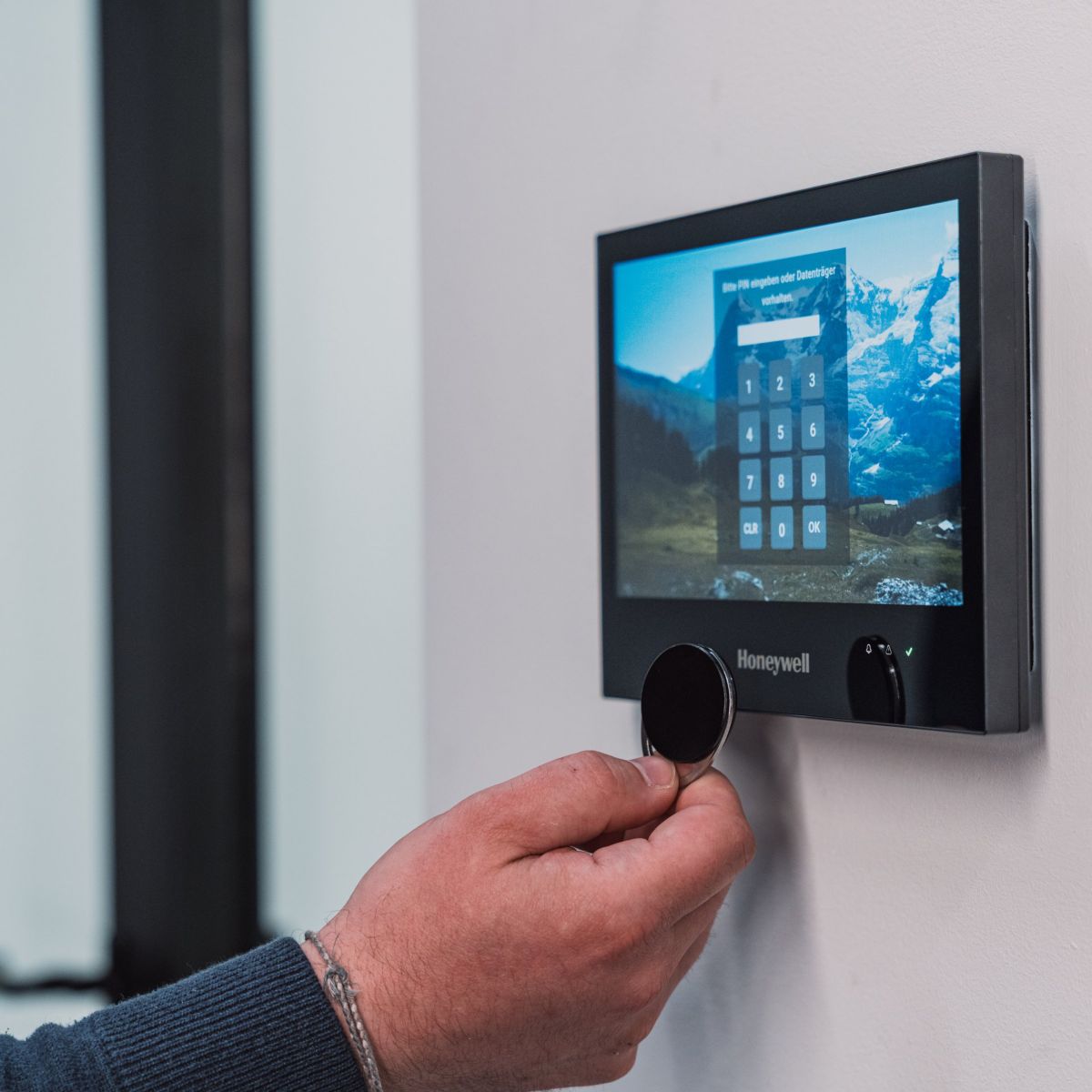
Mobile credentials use smartphones as access devices instead of traditional cards. Users present phones to readers for encrypted credential validation, which can reduce administrative burden and support remote provisioning.
Organizations can issue credentials remotely without requiring security office visits. Lost phones allow instant credential revocation. Many implementations can support multiple authentication factors, combining phone credentials with biometric verification.
The technology works with Bluetooth for hands-free access or near-field communication (NFC) tap (similar to contactless payment). This flexibility also helps organizations deploy mobile credentials gradually, starting with high-traffic areas before expanding.
Security and Access Solutions
Protecting people, places and assets worldwide
Integrate security solutions to help protect people, streamline operations and reduce risk to facilities
Integrate security solutions to help protect people, streamline operations and reduce risk to facilities
Integrated Security and Access Solutions
Mobile- and cloud-enabled access control, video surveillance, intrusion detection and locking solutions help create safer, more efficient facilities. Building operators and security teams across dynamically evolving verticals depend on our mobile- and cloud-enabled technologies for access control, video surveillance, intrusion detection and locking solutions to help create safer and more efficient facilities.


Frequently Asked Questions About Security and Access Solutions
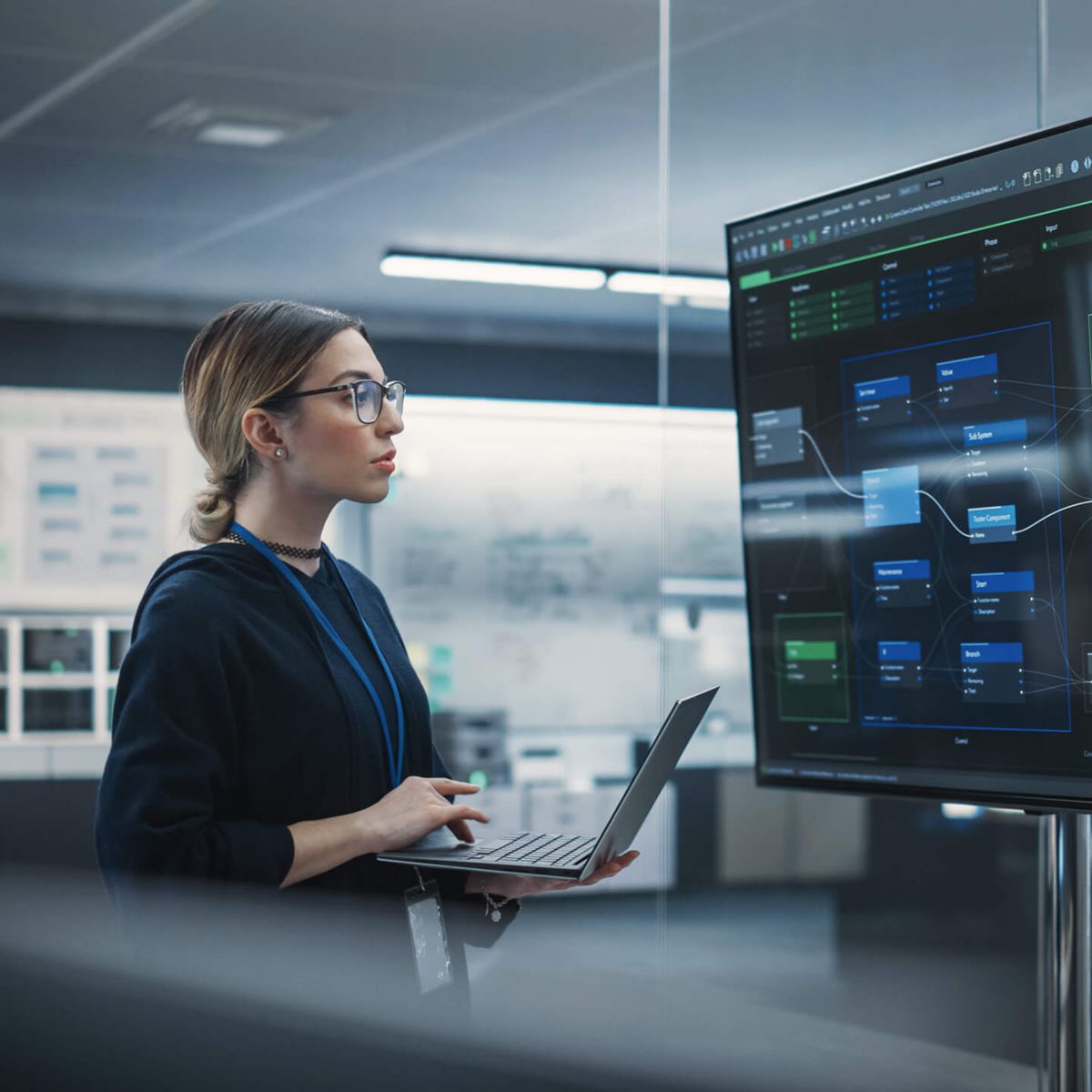
Commercial and industrial facilities benefit from coordinated security solutions where access control, video surveillance, intrusion detection and building automation work together. That integration happens through open protocols and APIs that allow systems to share data. When someone badges into a secure area, for example, access control can trigger cameras to record that entry. If an alarm activates, the system can automatically lock doors while sending video feeds to security personnel.
These integrations help reduce response times by providing coordinated information in a single view. Instead of checking separate platforms, operators can see unified data that helps them make faster decisions.
Security systems need to evolve as new threats emerge. Planning lifecycle management during deployment helps support long-term success. Software updates help address vulnerabilities, add features and maintain compatibility. Hardware maintenance can include testing readers, cameras and control panels.
Organizations can establish maintenance schedules covering firmware updates, credential database review and equipment inspection. Cloud-connected systems can also receive updates remotely, helping reduce onsite visits while maintaining the latest security protocols. These operational considerations help maintain system reliability beyond installation.