
Our software supports reduced operational costs through multiple approaches: predictive analytics help identify maintenance needs early to minimize downtime and helping to avoid costly emergency repair expenses. Remote monitoring helps minimize on-site service requirements, while automated workflows and integrated building systems help streamline operations.
Building Management Software
Autonomous building control at portfolio scale
Building management software that unifies building insights, helps support optimal performance and helps reduce carbon


Building management software that unifies building insights, helps support optimal performance and helps reduce carbon
Software-defined automation for modern building portfolios
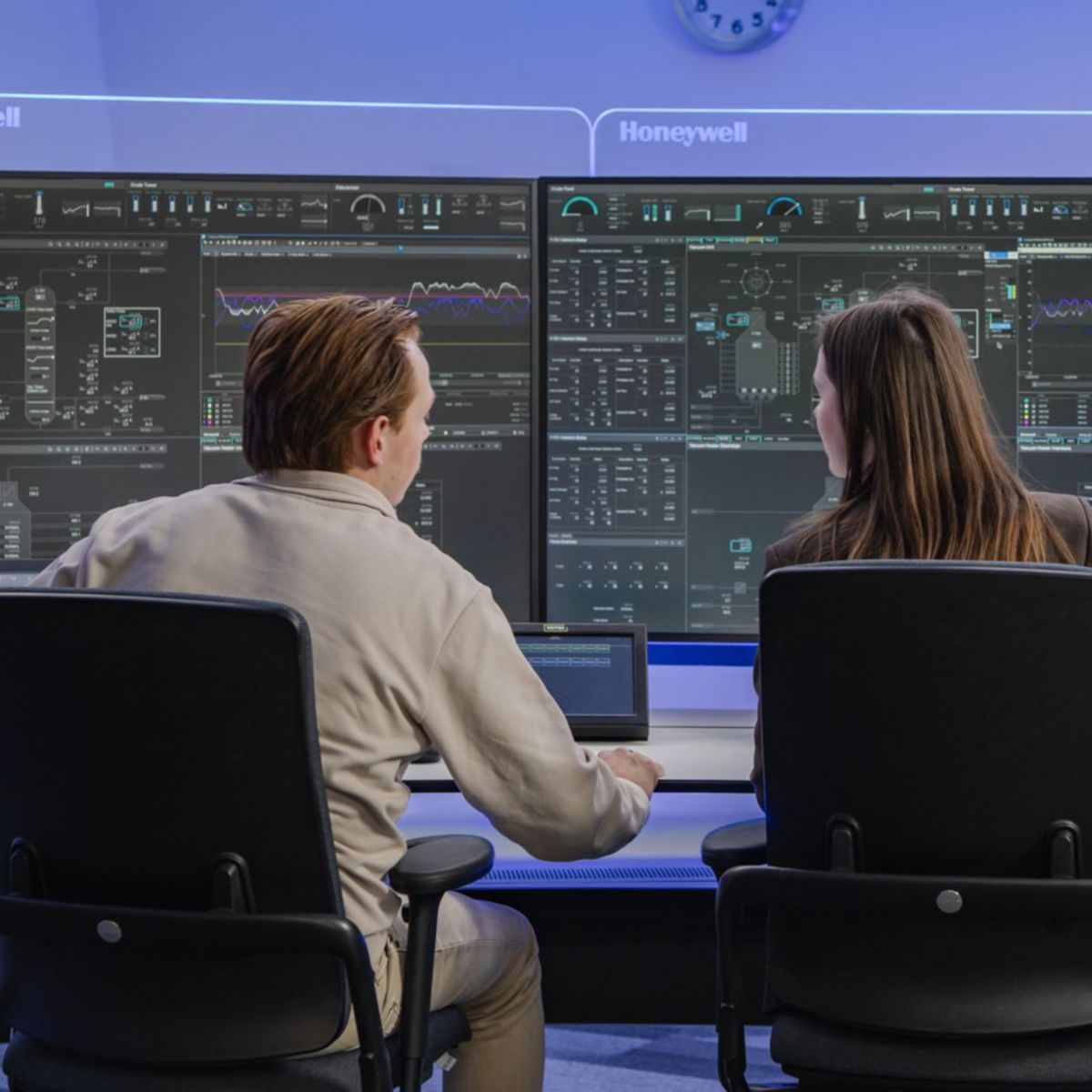
Building management software from Honeywell integrates AI-enabled insights with enterprise applications and secure connectivity to help centralize operations across single sites or global portfolios. From Remote Building Manager to predictive maintenance applications, our software supports higher levels of automation, near real-time visibility and helps organizations track and improve key performance outcomes.


-
34% of global energy demand
In 2022, 34% of energy demand globally was generated by buildings and construction, highlighting the importance of energy optimization for operational outcomes to help achieve sustainability goals. 1
-
37% of carbon emissions
Buildings and construction generated more than one-third of global energy and process-related CO2 emissions in 2022. Building management software is designed to help address carbon reduction while maintaining performance per year.1
-
$9.5 billion
Honeywell has guaranteed $9.5B in energy and operational cost savings via 3,400 projects for customers around the world, helping customers meet sustainability goals and infrastructure upgrades financially feasible.2
Frequently Asked Questions About Building Management Software
AI and machine learning building automation analyze building operation patterns to help improve energy use while minimizing impact on occupant experiences. Machine learning models help evaluate patterns, predict demand and automate adjustments based on occupancy, weather and utility rates. Intelligent automation can help detect anomalies earlier, guide operational decisions and coordinate systems in ways that support energy efficiency and resilience goals.
Open, vendor-agnostic architecture is designed to work with existing infrastructure and third-party equipment. As a result, our building management software can provide master systems integration across building management, fire and life safety, and security systems from multiple vendors. This flexibility helps reduce operational and lifecycle costs while providing the ability to upgrade specific components as needed.