
Building Materials

Manufacturing solutions for building materials

Process wood, gypsum and insulation more efficiently with advanced thermal process control and energy optimization.

Aerial view of workers leveling wet concrete over steel rebar, highlighting structural reinforcement and modern construction techniques.
Close-up of fiberglass insulation in wall framing, highlighting thermal efficiency, energy savings, and modern building materials.

Process wood, gypsum and insulation more efficiently with advanced thermal process control and energy optimization.

Outcomes in Building Materials Manufacturing

From gypsum wallboard to fiber board and wood products to ceiling tiles, drying operations directly impact product quality and plant profitability. Rising energy costs, emission regulations and throughput demands put pressure on temperature-critical production processes. 

Honeywell's advanced thermal process technologies, heat recovery solutions and connected diagnostics help you address these challenges while supporting consistent output, stable temperature control and high-volume production reliability.
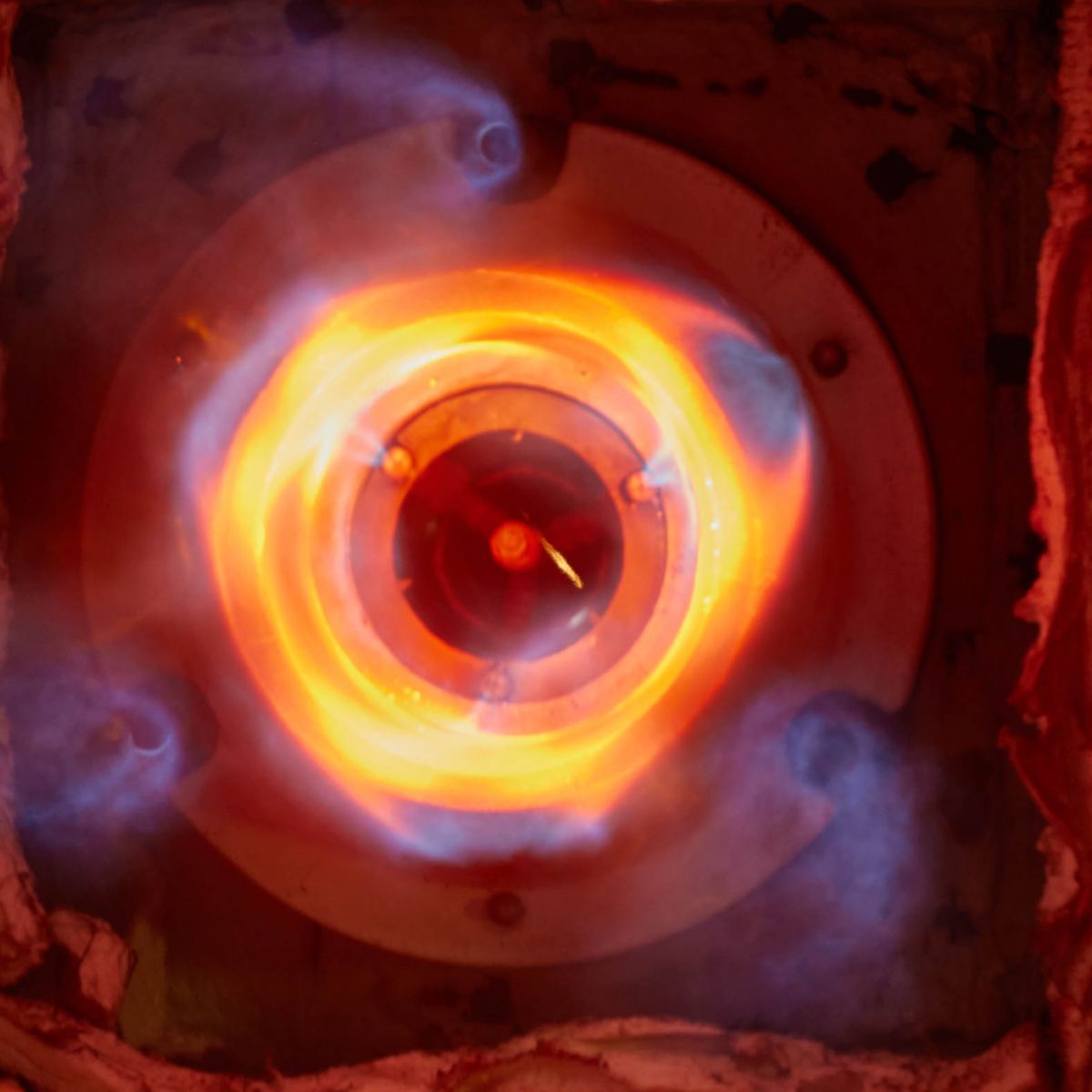
Industrial Burner radiant combustion high heat

Achieve uniform temperature profiles with modular burner design

Temperature uniformity across your drying zone determines product quality. Uneven heat creates defects, increases scrap rates and slows throughput. Honeywell's Linnox line burner uses a modular architecture that distributes heat evenly along the burner length. Modules can be configured in any sequence to match exact heat profile requirements. Maintaining uniform heat profiles across drying zones is essential for product consistency, throughput and energy efficiency in continuous production environments.


Our solutions work with fiber board and gypsum board dryers, where vertical mounting from top to bottom requires consistent heat distribution to mitigate product damage during the drying cycle.

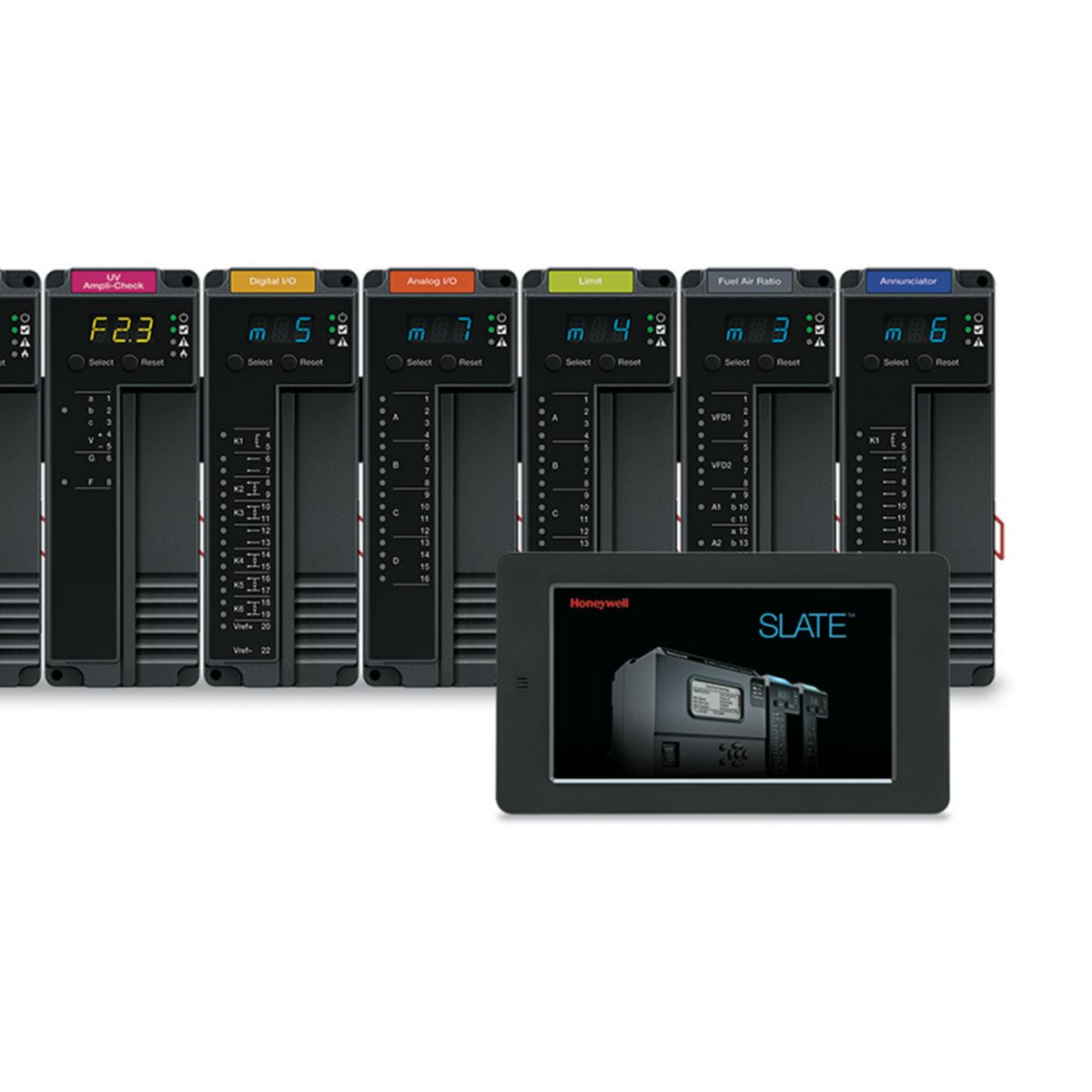
Honeywell SLATE modular combustion control system with burner control, I/O modules, and display for industrial automation and safety.

Increase production rate with faster troubleshooting

When thermal process issues occur, you need immediate visibility into what's happening across the entire temperature control environment. Honeywell's SLATE platform shows near real-time process variables operators not available to older relay-based systems. The SLATE AX Tool provides visual analytics that help you spot patterns and make faster decisions during troubleshooting. Plant personnel can collect and review ignition data, flame status and combustion conditions from the control room without waiting for technician arrival.

Worker inspecting large industrial pipes, representing heat transfer systems, energy efficiency, and advanced mechanical engineering solutions.

Higher thermal efficiency in building material manufacturing

Your dryer exhaust carries significant thermal energy that can be recovered to help improve efficiency, reduce energy demand and stabilize production performance. Capturing this waste heat with air-to-air heat exchangers can reduce fuel consumption depending on exhaust temperature and preheated air targets. Honeywell's sinusoidal plate heat exchangers provide high thermal effectiveness for clean applications, while dimple plate designs handle dirtier streams.

Engineers monitoring an industrial facility at night using laptop and field data, ensuring system performance, safety, and efficiency.

Reduce downtime and production disruptions

A single kiln interruption can disrupt temperature stability, resulting in lost production, scrap and unplanned downtime. Honeywell's Thermal IQ platform connects combustion equipment to a secure cloud service, making flame status, temperature trends and fault codes available on smartphones or tablets. The system also identifies performance degradation before failures occur, letting maintenance teams schedule repairs during planned downtime instead of responding to emergency shutdowns that disrupt production schedules.

Common Questions About Thermal Processing Equipment

Line burner designs with modular construction provide the most effective heat distribution for applications like gypsum board and fiber board drying. Honeywell's Linnox system uses individual burner modules, each 300mm in length, that can be assembled into lines up to 6 meters long. You select the capacity of each module—ranging from 24kW to 720kW per 300mm section—and arrange them in any sequence to create the exact heat profile your process requires. 

The integrated premix mixer thoroughly blends fuel and air before combustion, producing a uniform flame pattern across the entire burner length. This helps to eliminate hot spots and temperature variations that cause product defects. The modular approach also simplifies maintenance because you can service or replace individual sections without shutting down the entire burner assembly. Capacity ranges from 80kW/m to 2,400kW/m depending on your configuration.1

Source: 

Development of a new ultra lowNOx burner for fiber and gypsum board dryer

Fuel savings from heat recovery depend on your current exhaust temperature and how much you can preheat your combustion air. If your dryer exhaust runs at 1800°F and you install a heat exchanger to preheat combustion air to 800°F, you can reduce fuel consumption by nearly a quarter. Increasing the preheat temperature to 1200°F at the same exhaust temperature yields even more savings. Higher exhaust temperatures enable greater recovery. Plate-type heat exchangers typically provide better thermal effectiveness than tubular designs.1

Source:

Heat recovery for process efficiency

Remote monitoring transforms reactive maintenance into proactive troubleshooting by making equipment data accessible before failures occur. 

One customer site experienced a kiln interruption that stopped the entire board production line. The new connected SLATE with Thermal IQ platform allowed the site to remotely pinpoint the issue and corporate engineering to provide system and domain expertise. This collaboration via near real-time monitoring and review of performance data allowed them to realize a solution in hours instead of days. In the past, this type of unplanned outage would cost the plant over $100,000 in lost production, scrap, and emergency plant and third-party services. 1 

The system also identifies nuisance faults and gradual performance degradation before they cause failures. Maintenance teams schedule repairs during planned downtime instead of responding to emergency shutdowns. 

Source: 

Leading manufacturer implements Cyber Secure Connected Thermal Process Solutions for Enhanced Performance and Reliability Across the Corporation

Optimize Your Thermal Operations

Increase production, improve temperature stability and prevent unplanned downtime.